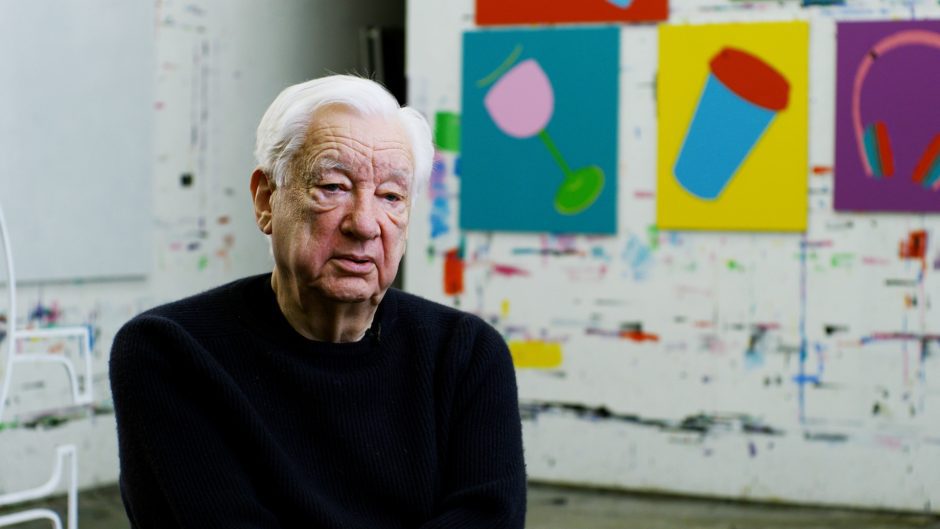
Moroccan-French writer Leïla Slimani reflects on the events of the summer of 2026, when many of her countrymen spontaneously attempted to flee to the Spanish enclave of Ceuta. Read more …
“There is something that people in the West don’t understand. You can decide tomorrow to go on the internet and buy a ticket to Marrakech. The youth from my country will never visit the Tour d’Eiffel, they will never visit the Alhambra, and they will never come to your country. Because for them, the world is forbidden.”
”I’ve always thought that I was very lucky because I have two things in my life. I have a room of my own, so a place where I can lock the door, and I can sit still. And I have a passport in the drawer of my office, and I can go whenever I want. And for a lot, a lot of young people in what we call the third world, they don’t have a room of their own because they share a room with their brothers, with their parents, so they have no intimacy and no possibility to move. So, I think that maybe the key to dignity, the key to happiness, is having this balance between the possibility of having intimacy and having also the opportunity to discover the world. And when you don’t have that, you experience humiliation.”
Leïla Slimani (b. 1981 in Rabat, Morocco) is a critically acclaimed French-Moroccan novelist, journalist, and cultural figure whose work has made her one of the most influential voices in contemporary francophone literature. She grew up between cultures — Moroccan, French, and Algerian — and studied political science in Paris before turning from journalism to fiction writing. Slimani’s literary career is marked by bold, provocative storytelling and a fearless exploration of taboo subjects such as sexuality, gender roles, societal pressures, and identity. Her first novel, Adèle (Dans le jardin de l’ogre), was published in 2014 and examines female sexual addiction and self-destruction within a societal context of repression and shame. This debut work garnered critical attention, was nominated for the Prix de Flore, and won the La Mamounia Prize, marking her arrival on the French literary scene. It is being adapted as a film directed by Carolina Jabor and starring Alice Braga. Slimani’s second novel, The Perfect Nanny (Chanson douce), published in 2016, became her international breakthrough. The psychological thriller about a nanny who murders the children in her care won the Prix Goncourt — France’s most prestigious literary award — in 2016, making Slimani the first Moroccan woman to receive it. The novel was later adapted into a film, translated into multiple languages, and recognized as one of The New York Times Book Review’s 10 Best Books of 2018. Following this success, Slimani published works that expanded her literary range: the essay Sex and Lies (2017), a series of intimate testimonies from women in the Arab world that highlights sexual politics and gendered silences; In the Country of Others (2020), the first in a family-history trilogy set in post-World War II Morocco; Watch Us Dance; and I’ll Take the Fire (Penguin, June 9, 2026). In 2026, Slimani published a personal essay, Assaut contre la frontière, in which she reflects on her relationship to the Arabic language, marking it as an absence, a loss, and a wound. Beyond her books, Slimani has been honored for her advocacy and cultural impact. In 2017, French President Emmanuel Macron appointed her as his personal representative to promote the French language and culture. For her activism in women’s rights and freedom of expression, she was awarded the Simone de Beauvoir Prize for Women’s Freedom in 2020. In 2026, she is in residence at the Museo del Prado, where she will create a new work inspired by the museum. She was also awarded the 2026 International Prize at the 61st Valencia Book Fair and received the insignia of Chevalier de l’Ordre National du Mérite (National Order of Merit) from France. Themes across her work consistently probe power dynamics, sexual politics, motherhood, identity, and the social structures that shape personal freedom.
Leïla Slimani on stage with Kiran Desai during the Louisiana Literature festival in August 2026. Both writers were interviewed by Lotte Folke Kaarsholm, cultural editor of the Danish newspaper Politiken.
Camera: Jakob Solbakken
Edited by: Signe Boe Pedersen
Produced by: Marc-Christoph Wagner
Copyright: Louisiana Channel, Louisiana Museum of Modern Art, 2026
Louisiana Channel is supported by Den A.P. Møllerske Støttefond.




 Series / 26 videos
 Series / 106 videos
 Series / 8 videos
 Series / 37 videos
 Series / 37 videos
 Series / 3 videos
 Series / 18 videos
 Series / 4 videos
 Series / 11 videos
 Series / 3 videos
 Series / 11 videos
 Series / 5 videos
 Series / 12 videos
 Series / 4 videos
 Series / 6 videos
 Series / 8 videos
 Series / 12 videos
 Series / 12 videos
 Series / 8 videos